 Photo: Egor Komarov / Pexels
- The ceiling
- Sixteen buttons, one bar at a time
- What imposed it
- Step programming as the only way into the machine
- What it produced
- Rhythm conceived as a pattern before it is a performance
Step programming is a philosophy before it is a format. When you compose a drum part by drawing a pattern — pressing a button to place a hit, leaving a step dark to leave silence — you are not transcribing something you first heard in your head. You are discovering what the grid permits and, more quietly, what it prefers.
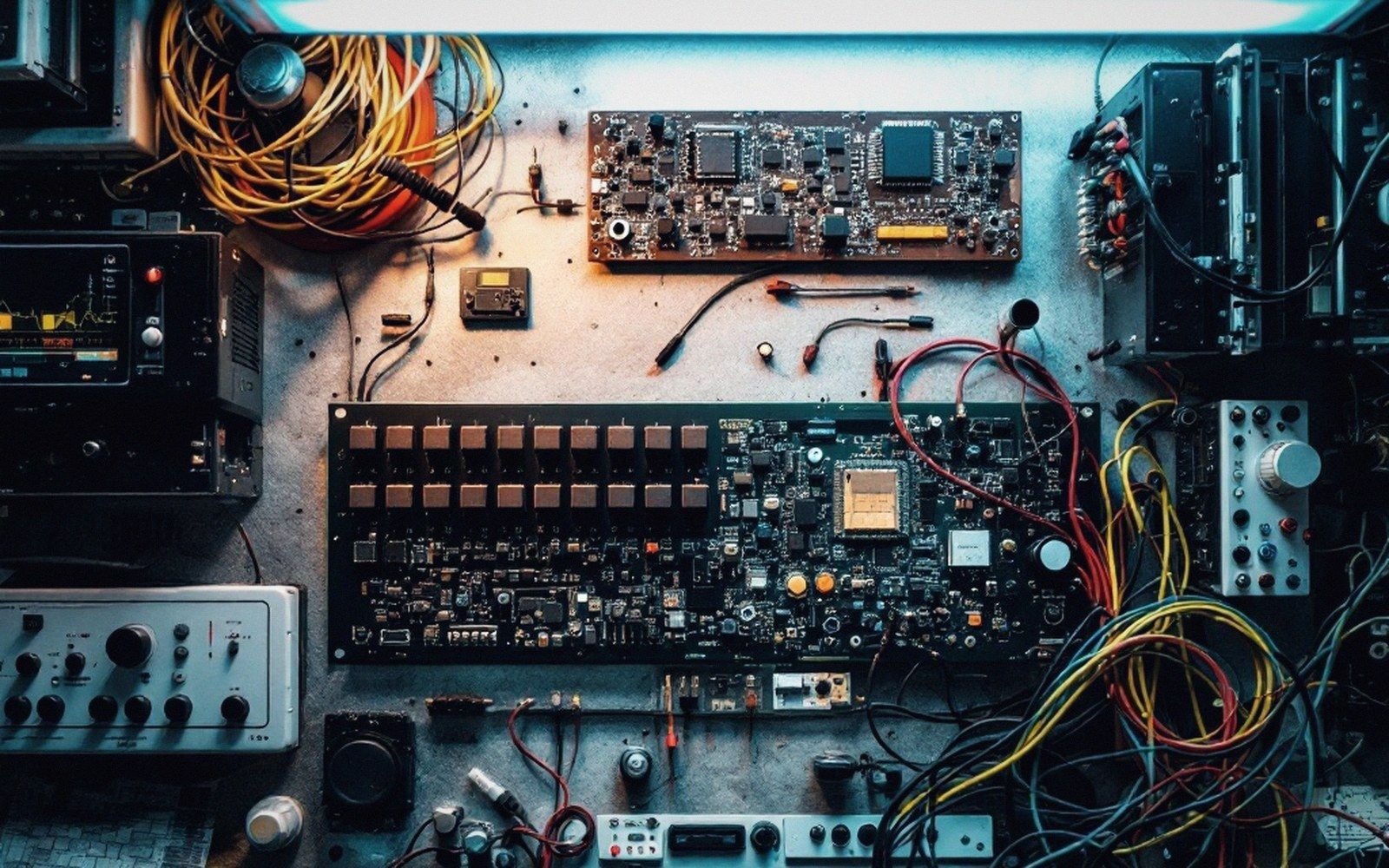
The grid's native preference is for regularity. Sixteen steps across a bar in 4/4 time means each step is a sixteenth note, and the pattern fills itself from left to right without favour or drama. You do not have to count. You can feel immediately whether a hi-hat falls on an eighth or a sixteenth, because it is either one button apart from the next hit or two. That visual spacing is cognitive shorthand, and it rewires how rhythm is conceived. A drum machine like the Roland TR-808 or TR-909 does not just store a pattern; it makes certain rhythmic ideas easy and others structurally difficult. Syncopation is perfectly achievable, but you must deliberately work against the grid's implied downbeats to find it. The grid suggests; you comply or resist.
This is constraint as composition. A drummer, imagining a fill, has continuous time at their disposal — a roll can break anywhere, last any duration. Sixteen buttons offer no such continuity. The fill must land on a step. Triplets are technically absent unless the machine offers a triplet mode or you stretch the interpretation, which is itself a decision and a sound. The shift register that fixed the step count to sixteen was a hardware economy; what it left behind was a cognitive frame that shaped a genre's rhythmic vocabulary.
- Sixteen stepsone bar of sixteenth notes; each step occupies an equal, visible slice of time
- Step two buttons apart = eighth note gap; step one button apart = sixteenth note gap — spatial distance encodes rhythmic value
- Tripletsabsent from a standard 4/4 sixteen-step grid unless a dedicated mode exists; omission shapes the vocabulary
The Part You Don't Programme
Where the pattern form quietly overturns conventional drum logic is in what it removes from the work. The step programmer sets a loop and it runs unchanged until someone intervenes. This means the pattern is also a commitment. You programme the minimal correct thing and let it repeat. Those repetitions do not feel identical to the ear, because the ear tracks the changing context above them — melody, bassline, vocal — but the rhythm itself does not vary.
What emerges from this is a particular kind of tension. Dance music structured around step-programmed patterns is often described as hypnotic; the right word is probably relentless. The repetition is load-bearing. A live drummer's micro-variation keeps the ear occupied so it accepts the phrase without question; a programmed loop's exact repeatability keeps the ear searching for variation that doesn't arrive, which generates its own forward momentum. The pattern is not trying to feel like a person. It is making a structural argument for iteration.
The Kit Was an Afterthought
Much of the debate around early drum machines focused on the sounds — whether the clap was convincing, whether the kick sat in the mix. That debate mostly missed the point. The producers who built the genre-defining tracks of early Chicago house and Detroit techno were not asking whether the 808 kick sounded like a Slingerland. They were asking what happened when a particular kick, with its particular weight and decay, landed on step five of a sixteen-step pattern alongside a particular hi-hat configuration. The answer to that question was sonic, rhythmic and structural simultaneously.
The sounds mattered. But the pattern came first. The pattern decided what was possible, what was probable, and what would cost you something to escape. The kit was the colour. The grid was the canvas.
- TR-808 (1980), TR-909 (1983)both use sixteen-step programming as their core interface
- Chicago house and Detroit techno, mid-to-late 1980s — genres built on step-programmed loops rather than live performance
- The grid as conventionwhat began as hardware economy became the assumed format for electronic rhythm globally