 Photo: Magda Ehlers / Pexels
A Shift Register Decided How Long a Bar Could Be
The hardware reason a bar is sixteen steps long
- The ceiling
- Sixteen steps, with no way to count anything else
- What imposed it
- A shift register, chosen because it was cheap
- What it produced
- Phrase length fixed across decades of music
Step count was never a musical decision. The number of steps in a hardware sequencer — almost always eight, almost always sixteen — came from the component that stored and advanced the pattern: a shift register, a chain of flip-flops, a set of thumbwheels or LEDs arranged along a row. Doubling the count meant doubling the hardware. Halving it meant the pattern looped faster than most music wanted. Sixteen landed at the intersection of what was cheap to build and what was long enough to feel like a phrase, and then it stayed there long after the hardware constraint that produced it had ceased to be binding.
The shift register is the key component. In a sequential circuit, information is stored in stages — flip-flop to flip-flop — and a clock pulse advances the register by one position each time it fires. Whatever is stored at the current stage controls the output: a note value, a gate, an accent. The register then loops back to stage one. The number of stages in the chain is the number of steps in the pattern; it is fixed at manufacture. You cannot have sixteen and a half steps. You cannot have thirteen. You cannot, without external tricks, have more steps than the physical register. The machine counts to its own limit and starts again.
This is why the Roland MC-8, a relatively expensive microprocessor-based sequencer from 1977, had to position itself partly on the fact that it could store longer sequences than shift-register machines could manage at all. Microprocessor storage meant sequence length was a software constraint rather than a hardware one — but the MC-8 was a professional device at a professional price, and it did not define what most studios or most musicians experienced as a sequencer. What did was the row of sixteen steps.
- 1 stage = 1 note: the basic unit of a shift register
- 8 stages = common first-generation step count (Moog 960, Buchla series)
- 16 stages = canonical drum-machine era count (TR-808, TR-909, TB-303 maximum)
- 32 steps = two chained 16-step patterns in Roland TR song mode
- 64 steps = four chained patterns = a four-bar section
Eight before sixteen, and what that imposed
Before sixteen became standard, eight was common. The Moog 960 Sequential Controller, dating to the late 1960s, gave you three rows of eight stages, which you could configure in various ways — rows in sequence, rows in parallel as pitch and gate and modulation — but each row's fundamental count was eight. Eight stages at a moderate tempo is a short phrase. It loops fast. It insists on repetition at a rate that can feel urgent or claustrophobic depending on what you do with it.
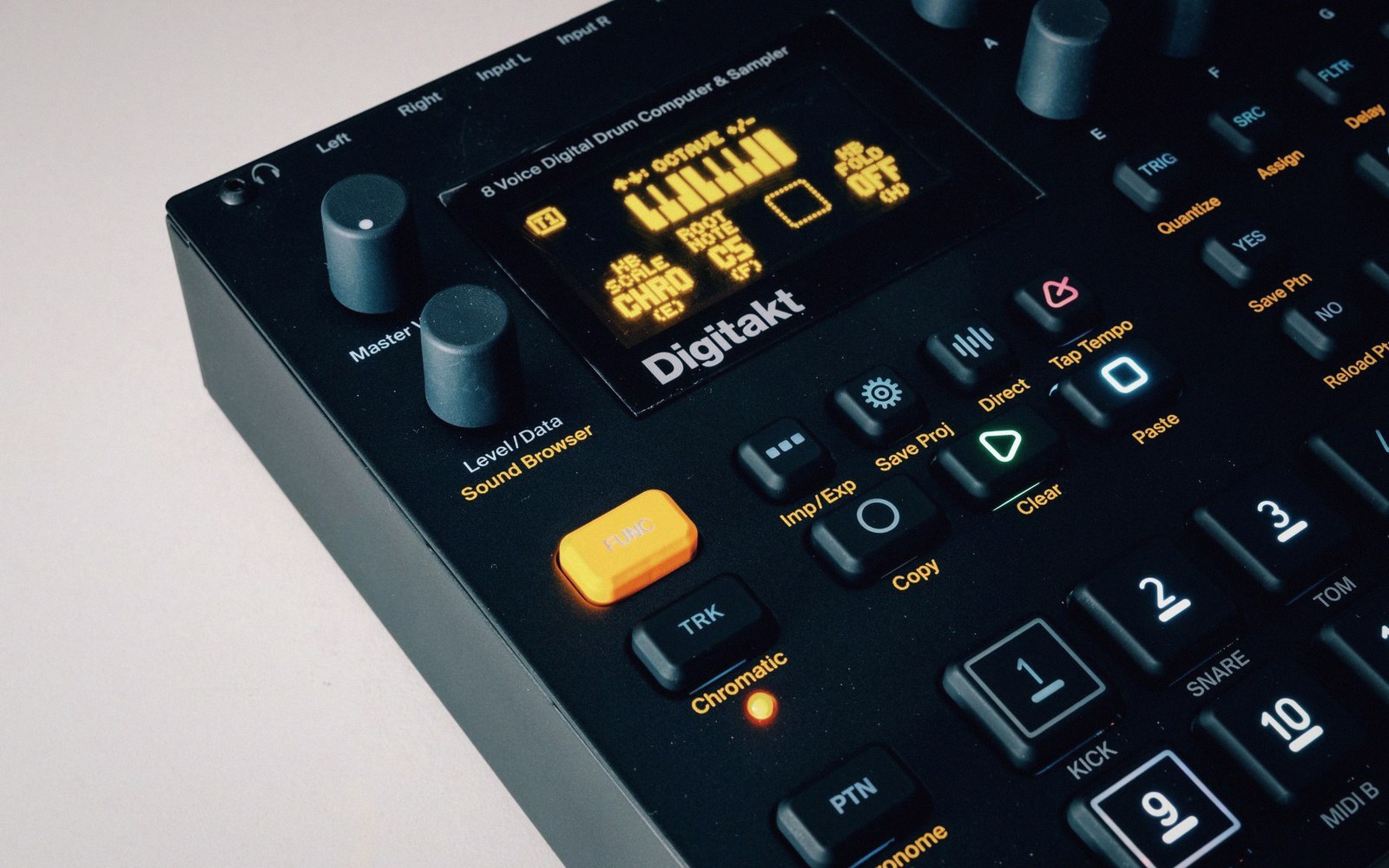
The Buchla Sequential Voltage Source and the associated Buchla sequencers operated in similarly small stage counts, and the sequential circuits that early Buchla composers used forced music into tight cyclic patterns whether they wanted that or not. The minimal, slowly shifting loops of early West Coast synthesis were partly a compositional philosophy and partly a capitulation to the machine's own appetite for repetition. When your sequencer has eight steps, you write eight-step music. When the pattern is sixteen steps, a different set of melodic and rhythmic decisions opens up.
Sixteen steps at a tempo of 120 BPM, with each step assigned to one sixteenth note, produces a pattern exactly four beats long — one standard bar in 4/4. This is not a coincidence, but it is not a conspiracy either. It is a convergence. The humans designing sequencer hardware in the 1970s understood that music is often organised in four-beat phrases. They also knew that sixteen, being two to the power of four, is the natural doubling of eight, which is itself two to the power of three. Both numbers are native to binary hardware. A shift register with sixteen stages costs about twice as much as one with eight. You end up at sixteen because it maps cleanly onto musical time, and because it is the next affordable step up from eight.
The Roland TR-808, released in 1980, used sixteen steps. The TR-909 used sixteen steps. The TR-606 used sixteen steps. The Korg KR-55 and its successors used sixteen steps. When a manufacturer announced a drum machine in this era, the step count was so reliably sixteen that it barely needed to be advertised as a feature. The machines that deviated — the Linn LM-1, which used a real-time recording method rather than strict step entry — positioned themselves partly on that difference. The LinnDrum and the Oberheim DMX could record timing nuance that no fixed-step grid could capture. But those were expensive machines, and the musicians who could not afford them wrote their music in sixteen.
When you hit the end of the register
What happens when your phrase needs to be longer than sixteen steps? The canonical answer, in early drum machines and sequencers, was that you chained patterns — storing a second sixteen-step pattern and triggering it to follow the first. Two chained patterns gave you thirty-two steps: two bars. Four gave you sixty-four: four bars. This is how Roland's TR-series machines built a song: a sequence of patterns, each sixteen steps, assembled into a song chain. The consequence worth noting is that the sixteen-step boundary became a seam in the music. Fills were typically one sixteen-step pattern. Verses and choruses were sequences of patterns. The unit of composition was the pattern, and the pattern was sixteen steps long.
Some sequencers offered a step count variation. The Roland TB-303, the bass companion to the TR-606, allowed you to program sequences from one to sixteen steps, with a pattern-length control that would truncate the register short of its maximum. This made it possible to create phrases of three steps, five steps, or seven — patterns that would loop in and out of phase with a sixteen-step drum part, drifting ahead or behind until the two aligned again by mathematical coincidence. The odd-step patterns of a lot of acid music were not a rejection of the sixteen-step convention; they were a consequence of musicians discovering, often accidentally, what happened when a sub-sixteen pattern was left running against a full-bar loop. The machine's own arithmetic produced the polyrhythm.
- Moog 960 Sequential Controllerlate-1960s, three rows of eight stages
- Buchla sequencersWest Coast, early 1970s, small stage counts driving cyclic composition
- Roland MC-8 (1977)microprocessor-based, escaped the shift-register limit at professional cost
- Roland TB-303bass sequencer, 1–16 step variable length, acid polyrhythm by accident
- Roland TR-808 / TR-909 / TR-606sixteen steps, the canonical hardware era
- Linn LM-1 / LinnDrumreal-time recording, positioned against fixed-step grid
- Oberheim DMXreal-time timing capture, contrast to step-entry machines
- Akai MPC seriessixteen-step feel carried forward into sampler-sequencer hybrid
- Native Instruments Maschine / Ableton Livesoftware inheriting the sixteen-column default
The convention outlives the constraint
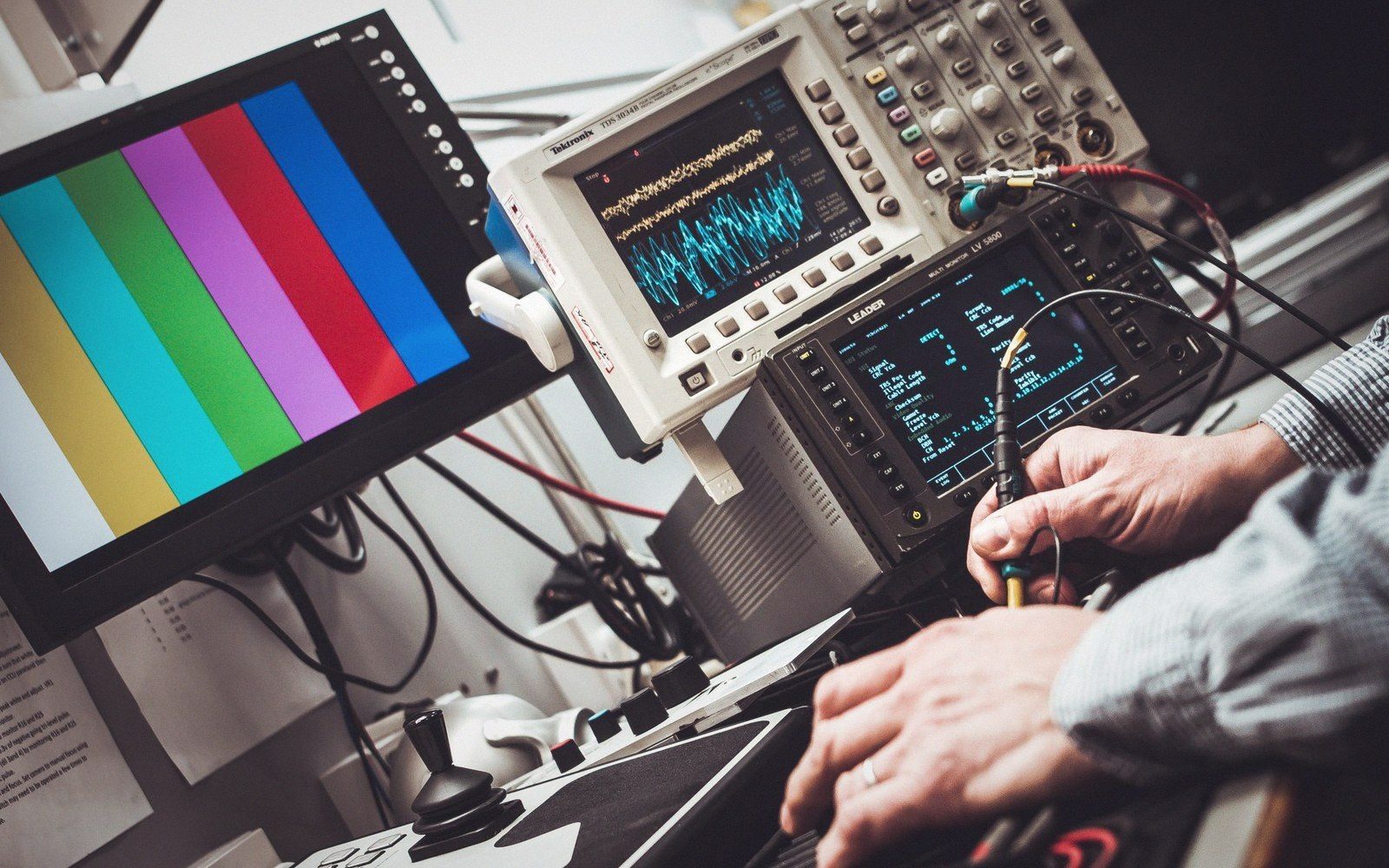
By the time affordable sequencer software arrived in the 1980s and early 1990s, the hardware constraint was already dissolving. Memory was small but growing. The architecture was entirely flexible. And yet software sequencer interfaces almost universally presented patterns in multiples of sixteen, with sixteen as the default, because the musicians using them had learned their sense of phrase length on hardware that counted to sixteen and stopped.
This is the point at which a constraint becomes a convention and a convention becomes an aesthetic fact. The sixteen-step bar did not survive because it continued to be the only option; it survived because an entire generation of music — hip-hop, house, techno, early R&B, commercial pop — had been written inside it. Producers who graduated from TR-808s to MPC samplers found that the MPC, though it offered longer sequence lengths, defaulted to patterns that felt like the same sixteen-step unit, just played with pads instead of buttons. When Native Instruments released Maschine and Ableton codified the eight-bar loop as a default clip length, the ghost of the shift register was still legible in the grid: sixteen columns, four beats, one bar.
The counterpoint is that musicians who grew up with software rather than hardware sometimes work in phrase lengths that the hardware era would have found strange — seven bars, twelve bars, five bars of odd subdivisions. The constraint, once lifted, produced practitioners who could genuinely ignore it. But the sixteen-step bar remains the dominant unit because most of the music that trained listeners' ears was made inside it, and most of the interfaces designed to make new music still present it first.
The register and the clock
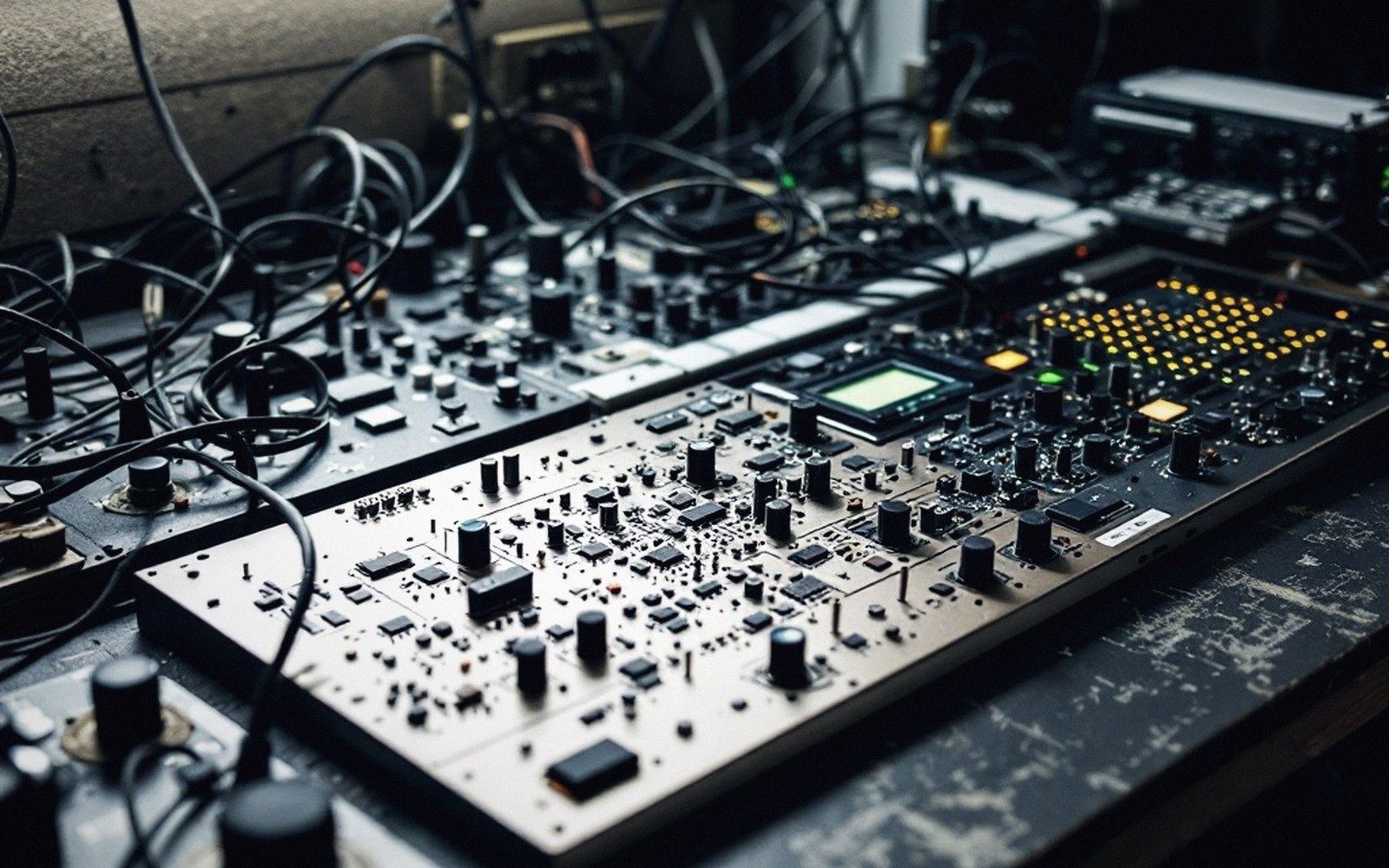
It is worth being precise about what the shift register does and does not determine. It determines step count — how many positions exist in the pattern. The clock determines tempo — how fast those positions are visited. These are independent variables. A sixteen-step pattern with each step one sixteenth note is always a four-beat phrase, one bar in 4/4; tempo only changes how long that bar lasts: two seconds at 120 BPM, four seconds at 60 BPM. Musicians manipulated this by changing clock rate, by changing step resolution, or by deliberately misrouting clock signals. The pattern length was fixed; the relationship between that pattern length and musical time was adjustable.
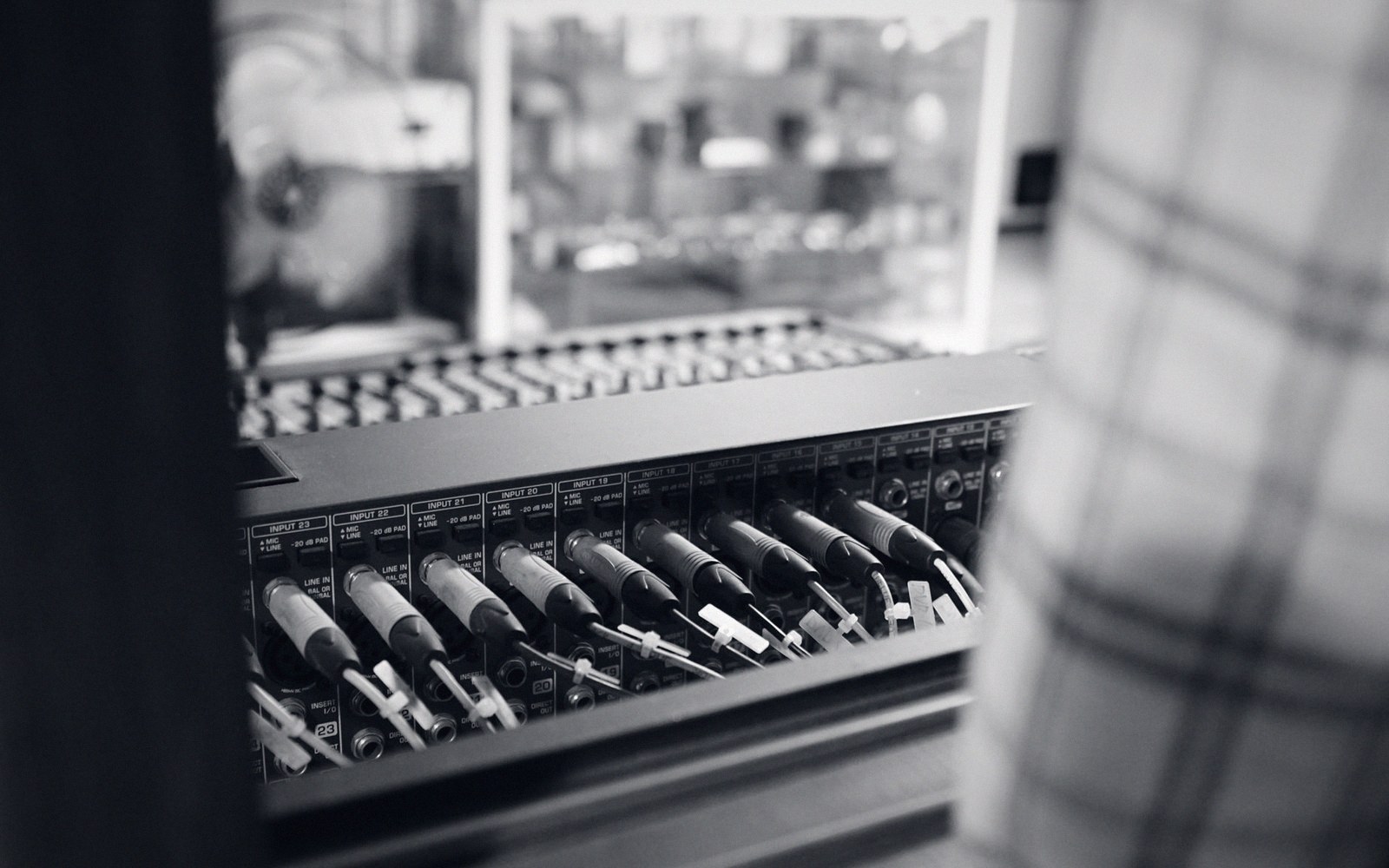
Sync architectures and clock signals determined which machine held the tempo, but the step count was always upstream of all of that — set at manufacture, determined by a chain of flip-flops, encoding an assumption about phrase length that became so embedded in musical culture that even now, in a world of infinitely flexible software, the first thing most interfaces offer you is sixteen steps in a row.
The shift register is gone. The convention it made is everywhere.