 Photo: cottonbro studio / Pexels
- The ceiling
- Half the voices analogue, half sampled
- What imposed it
- A cost compromise written into the voice architecture
- What it produced
- A hybrid sound, and the genre that took it as its own
There is a moment in the mid-1980s when drum machine design split into two clear camps. One side kept building analogue voices — circuits that approximated drums through oscillators, noise generators, and envelope-shaped transients. The other side loaded samples, tiny digital recordings of real drums that played back from ROM chips on demand. Both camps had canonical machines and committed users. The hybrid sat between them, belonging fully to neither — and it ended up defining a decade of commercial music more completely than either pure approach managed.
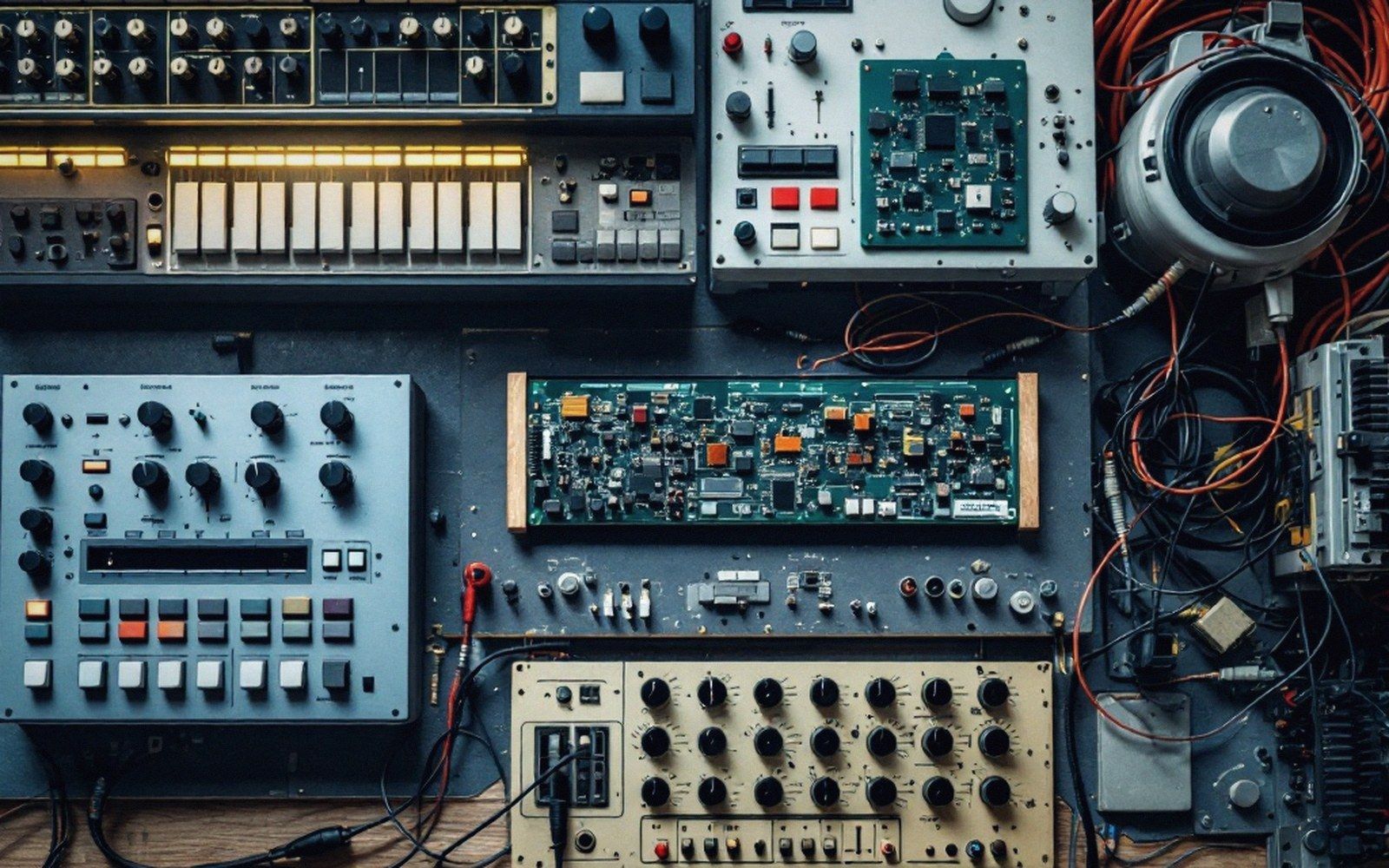
The logic of the hybrid was, at first, purely economic and practical. Samples made kick drums and snares sound more realistic — or at least more recognizably like a recording studio's idea of a drum kit. But storing samples in ROM cost money, and the converters required to produce clean digital playback added circuit complexity. Analogue synthesis, by contrast, was cheap for tones that already worked well synthetically: the hi-hat is fundamentally a shaped noise burst, and a noise generator plus a tight VCA envelope does that job at a fraction of the cost. The hybrid machine was therefore a budget decision that became an aesthetic one.
- Sampled voicessounds stored in ROM chips and played back by a digital clock; attack and decay fixed at recording
- Analogue voicesound generated by circuit (oscillators, noise generators, VCAs) in real time; shape determined by component values
- Output stagethe analogue summing and amplification circuitry that a signal passes through after leaving its source; colours the sound regardless of whether the source is digital or analogue
- Latency profilethe time it takes for a given voice to reach its peak amplitude after a trigger; differs between sampled and synthesised voices on the same machine
The LinnDrum, released in 1982, is a useful counterpoint, because it did not take this route. Roger Linn's previous machine, the LM-1, had used sampled drum sounds exclusively — each one stored individually in ROM, each voice its own dedicated chip. The LinnDrum kept that all-sampled approach for every voice, cymbals included, while bringing the price down far enough to reach many more studios. Its sound came from the samples themselves and from the circuitry they passed through on the way out. Producers heard this as a character, not a defect, and used it accordingly.
The Roland TR-707 and TR-727, both arriving in 1984, approached the territory from a different direction. The 707 used sampled sounds stored in ROM, but those samples were short — aggressively short by the standard of what recording engineers thought acoustic drums required — and the playback circuitry ran them through summing paths that introduced their own coloration. The machine was digital in its storage and retrieval but analogue in its output stage, and the output stage mattered. Levels summed through passive mixing networks, with the final signal shaped by a circuit that was never fully neutral. Separating the machine's digital decisions from its analogue decisions, and assigning credit for the sound accordingly, is genuinely difficult, which is itself part of what a hybrid architecture produces: an ownership problem for the tone.
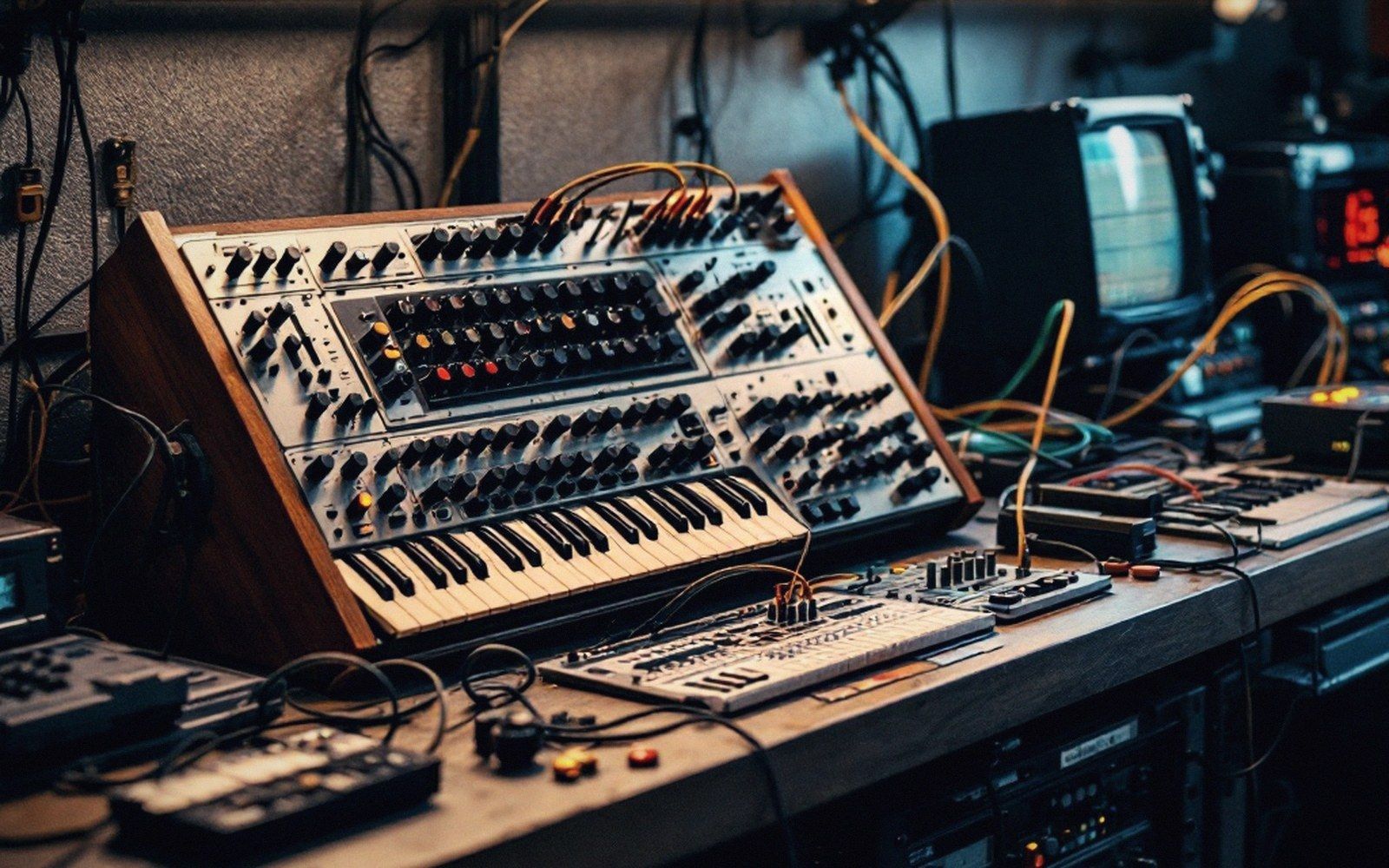
What made these machines genuinely generative — rather than merely compromised — was the way their specific limitations interacted with the genres that adopted them. The 707's short kick sample was punchy without being complex, leaving low-frequency space in a mix that a more accurate drum recording would have filled differently. Its short sampled hi-hats had a frequency emphasis that cut through dense arrangements. Neither voice was especially realistic. Both were extremely useful.
The deeper consequence of the hybrid design was rhythmic. Because different voices on the same machine had fundamentally different latency profiles — sampled voices played back on a clock edge, while filtered noise voices shaped themselves over a few milliseconds of envelope time — the machine's internal groove was structurally built in. The attack of the kick and the attack of the hi-hat did not arrive from the same kind of circuit. The accent and swing parameters that programmers applied on top of this structural asymmetry were working with a machine that already had opinions about feel at the hardware level.
This is what separates the hybrid from machines that simply combined features. The Oberheim DMX used sampled voices and gave engineers direct outputs, making it cleaner and more separable. The Roland TR-808 was entirely analogue, making it consistent. The hybrid's internal argument between digital precision and analogue shaping was not resolved — it was left running, audibly, in every pattern. The snare hits at its moment but blooms slightly afterward, the way a real snare does, not because the sample captured that bloom but because the output circuit introduced it.
Genre histories name these machines in passing — the 707 threading through early house records, for instance — but the machines' actual contribution was not sonic in the simple sense. They contributed a structure: a set of constraints arising from an unresolved design decision, generating a timing and tonal character that no one fully planned and no one could fully avoid. The hybrid drum machine did not know what it was. That uncertainty had a sound.
- LM-1 (1980)Roger Linn's first drum machine; all-sampled voices, individual ROM chips per sound; priced out of most studios
- LinnDrum (1982)mass-market follow-up; all-sampled voices, cymbals included; appeared on enormous numbers of commercial records in the early-to-mid 1980s
- TR-707 (1984)Roland's entry-level sampled machine; short ROM samples, analogue output summing; central to early house production
- TR-727 (1984)Roland's Latin-percussion companion to the 707; same architecture, different sample set
- Oberheim DMX (1981)all-sampled, individual direct outputs; used heavily in hip-hop and R&B