 Photo: Andrey Matveev / Pexels
- The ceiling
- A handful of towns made almost all of them
- What imposed it
- Manufacturing geography and the supply chain behind it
- What it produced
- Machines from one place, music from somewhere else entirely
Most of the machines that made electronic music were built in a small number of places, and almost none of those places were where the music got made. The geography is stark once you look at it: a handful of industrial towns in Japan, a cluster of workshops on the American East Coast and in California, a few engineering firms in Germany and England — and then the records that came out of Chicago, Detroit, New York, London and Kingston, made by people who had nothing to do with the factory floor.
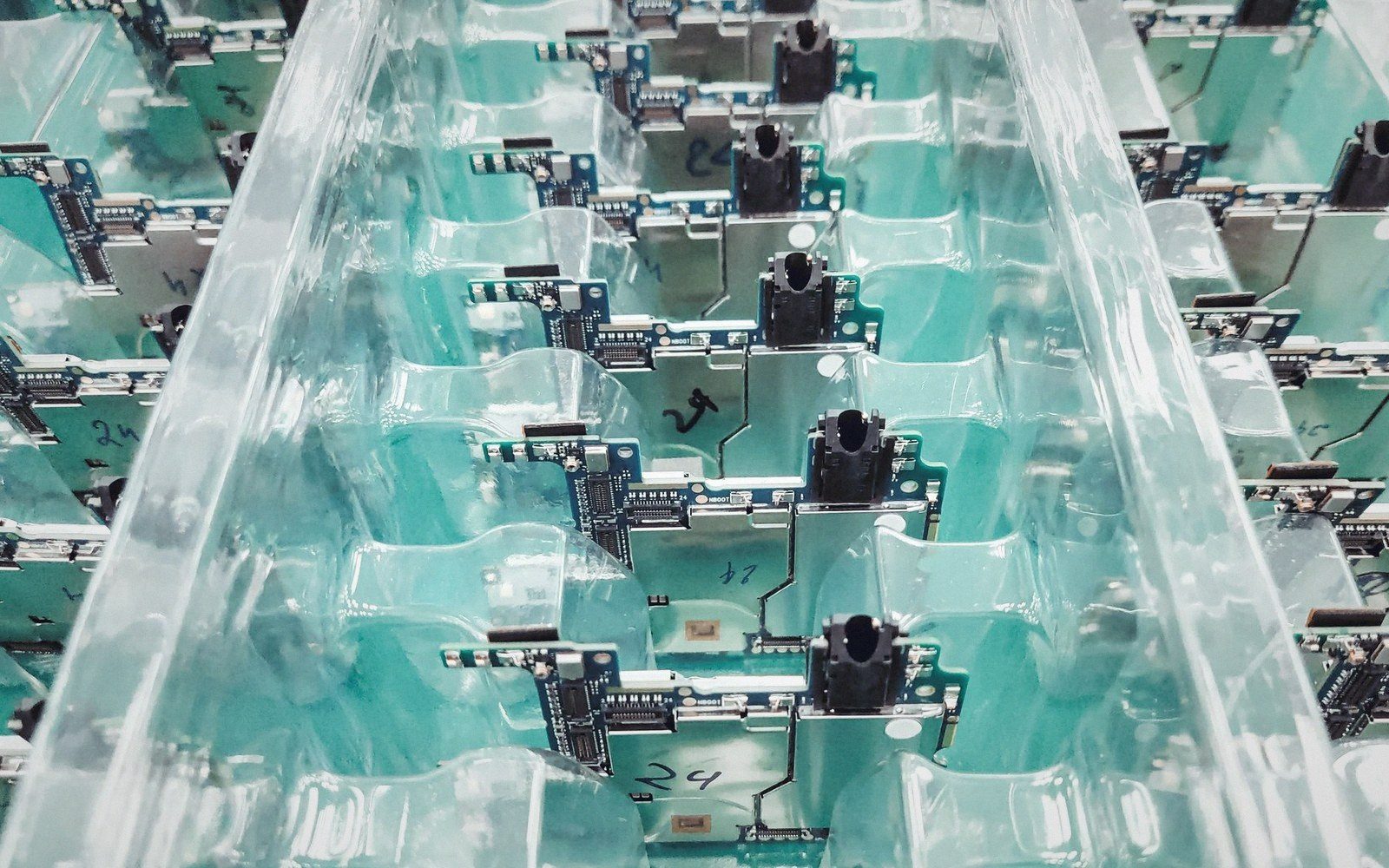
The Japanese concentration is the most consequential. Roland, founded by Ikutaro Kakehashi in Osaka in 1972, moved its manufacturing to Hamamatsu, a mid-sized city on the Pacific coast that already housed Yamaha and later Kawai. Hamamatsu was not a cultural capital; it was a precision-engineering town, a place where the tooling knowledge needed to bend steel chassis and etch circuit boards existed in industrial depth. TEAC, Tascam's parent, built in Tokyo. Korg started in Tokyo too, founded in 1962. The effect was a kind of concentration of means: the instruments emerged from a single geography of skilled labour and component supply, then dispersed by container ship to everywhere else.
- Hamamatsu, JapanRoland, Yamaha, Kawai production hub
- TokyoKorg, TEAC/Tascam origins
- Trumansburg, New YorkMoog workshop, small-batch production
- San Jose, CaliforniaSequential Circuits (Prophet-5)
- Los AngelesOberheim Electronics
- Newton, MassachusettsARP Instruments
- Watford, EnglandEMS (VCS3, Synthi series)
- Hamburg, GermanyPPG (Wave series)
In the United States the picture was more scattered but followed its own logic. Moog synthesisers were made in Trumansburg, New York — a small town outside Ithaca where Robert Moog had a workshop rather than a factory, hand-assembled instruments going to university studios and rock musicians who waited months for delivery. Sequential Circuits, which made the Prophet-5, worked out of San Jose, California, part of the same Bay Area electronics culture that produced the semiconductor industry. Oberheim Electronics operated in Los Angeles. ARP Instruments was in Newton, Massachusetts. The geographical spread meant that American synthesiser manufacturing never consolidated the way it did in Japan, and several of those companies folded before the decade turned.
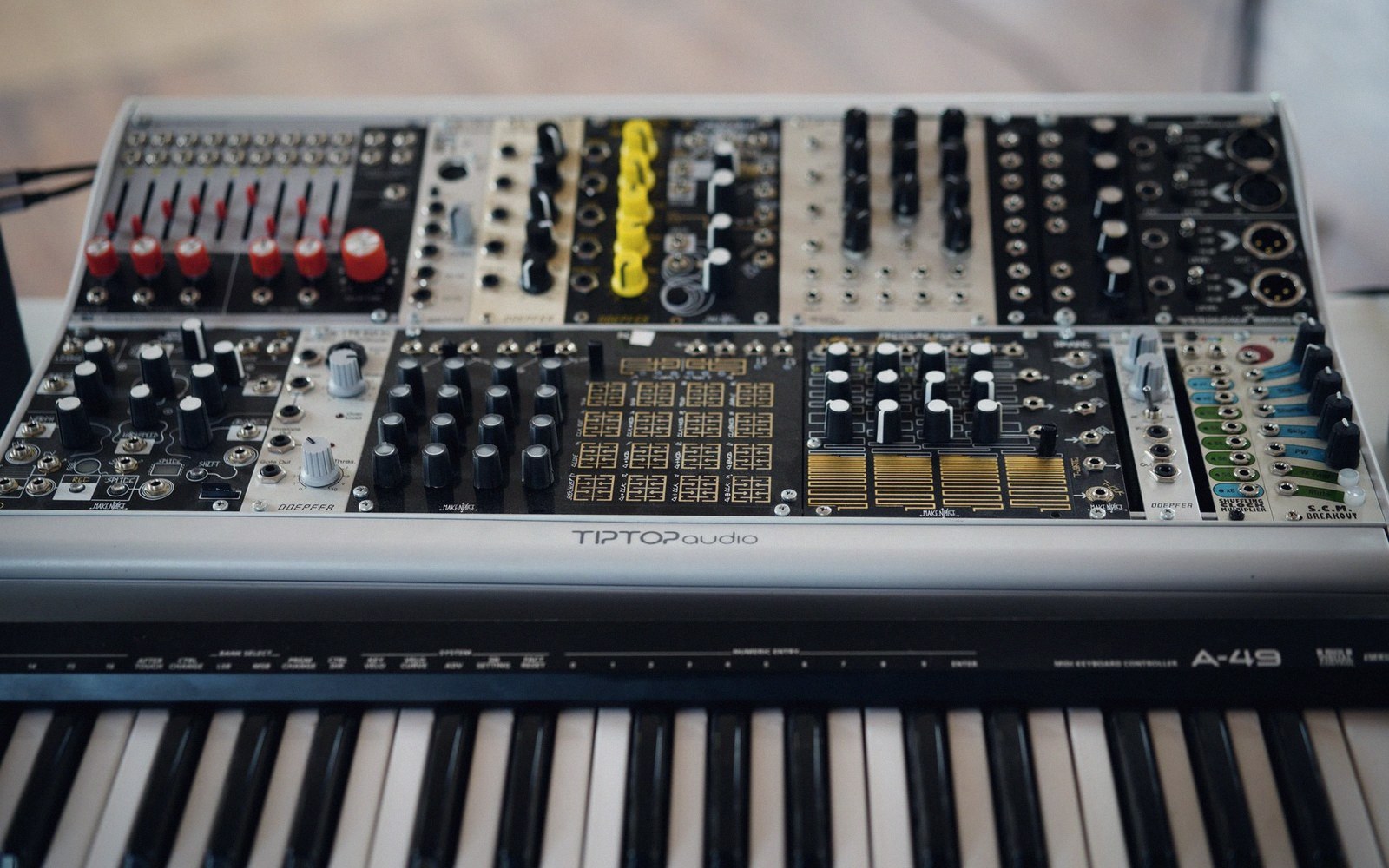
The German strand is different again. Moog's influence had an independent parallel in the work coming out of Cologne and Düsseldorf — studios attached to broadcasters and universities, where engineers like Harald Bode had been building custom electronic instruments since the 1950s. The companies that commercialised that tradition — Doepfer, much later; PPG, briefly in Hamburg — were small and specialist in a way the Japanese firms were not. ETAS in Frankfurt made the Synthi series alongside EMS in Watford, England, two small firms building instruments that felt handmade because they were.
What the Distance Produced
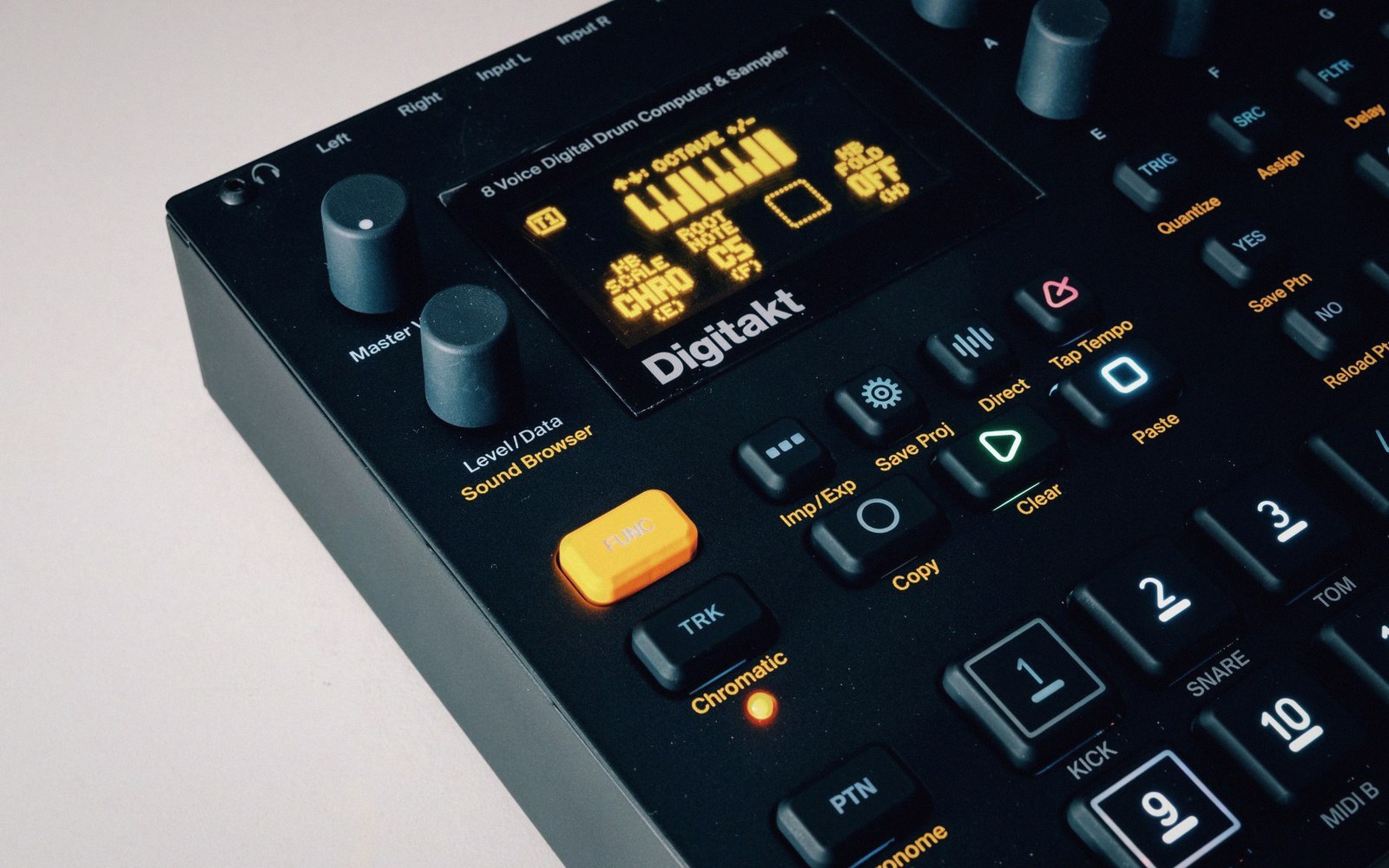
That gap between manufacture and use is not just biographical trivia. It shaped how the instruments were encountered. A Roland TR-808 or TR-909 arrived in a city like Chicago or Detroit as an object from nowhere in particular — no local context, no heritage, no claim on any musical tradition. The manual was translated technical language. The machine had no cultural allegiance. That blankness was part of what made it available. It could be repurposed without anyone deciding it was being misused.
The TR-808 and its commercial failure is the obvious case. The instruments that ended up in pawn shops and second-hand stores were then bought for low prices by producers in cities that were geographically and economically remote from the engineers in Hamamatsu who had built them. The distance that had once been logistical became cultural, and cultural became generative.
This is also part of why certain sounds carry a period feel so precisely. When the factory was in one place and the music was in another, the instruments arrived as complete, fixed objects — no updates, no revisions, no communication between user and maker. What the circuit did was what it did. The filter curves, the clock resolution, the specific character of a VCF designed to a price point in Osaka: all of that was locked at the moment of manufacture and became the condition of the music rather than a parameter to be adjusted. Constraint arrived by container.
- 1950s — custom instrument building in German broadcast studios
- 1962 — Korg founded, Tokyo
- 1972 — Roland founded, Osaka; manufacturing later in Hamamatsu
- Late 1970searly 1980s — peak of Japanese commercial synthesiser output
- Mid-1980sARP, Sequential Circuits, PPG all fold; Japanese firms consolidate
The geography has shifted since. Manufacturing for current instruments disperses across East and Southeast Asia — Taiwan, China, South Korea — while design often happens elsewhere, and the cultural centres that first used the machines have been replaced by a global infrastructure of shipping and download. But the original window, roughly 1970 to 1995, was one in which a very small number of postwar industrial cities produced nearly all of the tools, and a very different set of cities decided what those tools were for. The music is a record of that distance as much as anything else.
- Hamamatsu
- Osaka
- Detroit
- Chicago
- Dusseldorf
- Sheffield