 Photo: Søubhik Bera / Pexels
- The ceiling
- Nothing reaches tape unmarked by the desk
- What imposed it
- Channel path, EQ curves and finite headroom
- What it produced
- A studio signature credited entirely to the machines
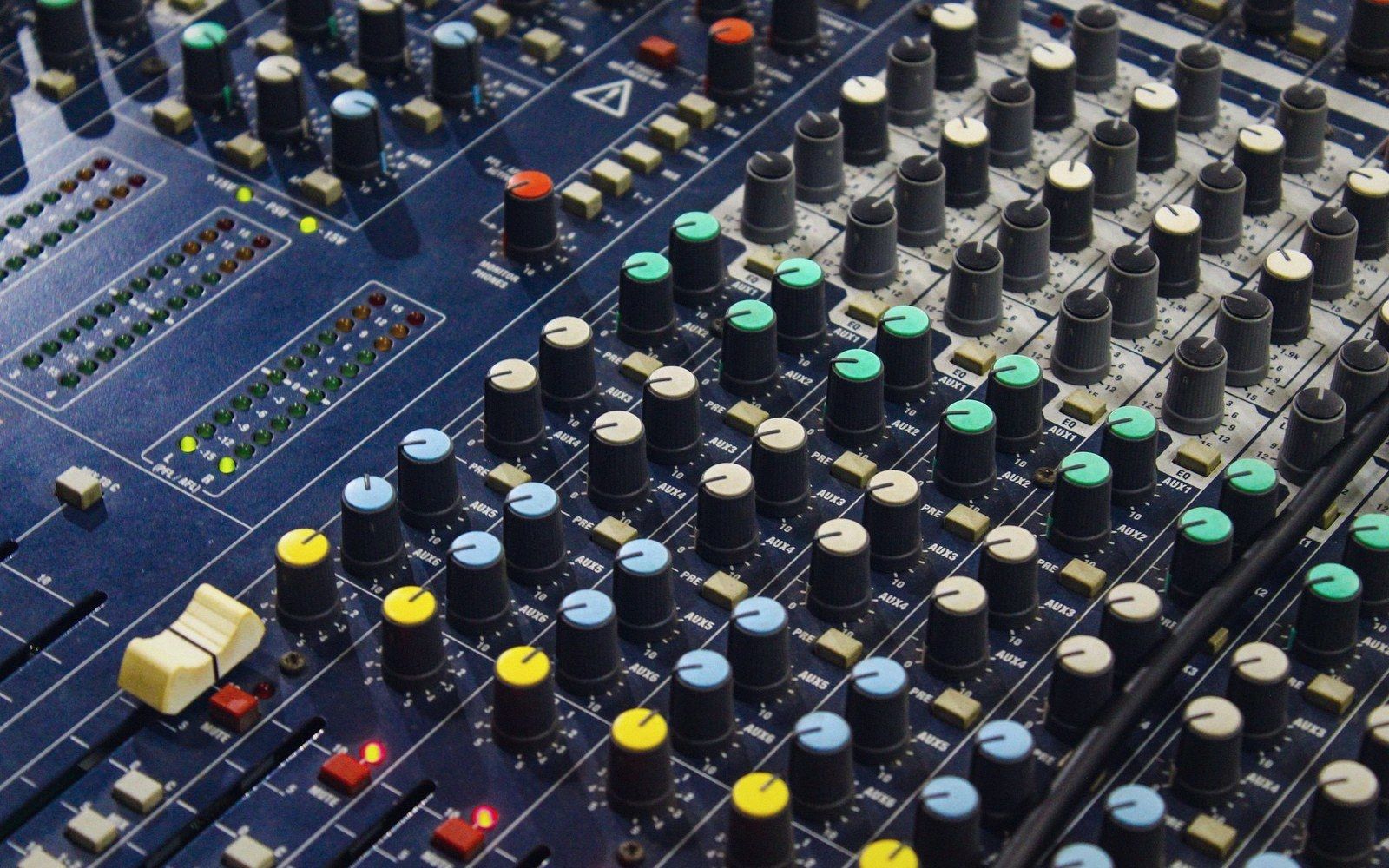
A mixing console is credited for nothing. Records list the drum machine, the synthesiser, the tape machine; they name the studio, occasionally the room. The desk sits between all of those things and shapes all of them, and receives no title on the sleeve.
This is partly because the console's contribution is structural rather than spectacular. It does not make an obviously distinctive sound the way a resonant filter does, or print a character as legible as tape saturation. What it does is subtler and more pervasive: it sets the headroom within which everything else operates, it colours the signal at every stage of the channel path, and it determines how individual sounds combine when they arrive at the mix bus together. Every record made on a large-format console is partly a record of that console — its transformers, its amplifier topology, its EQ curves, its summing behaviour. The mixer is always playing; it just never takes a bow.
- Microphone preamp / line inputfirst stage of amplification; transformer or solid-state, each with distinct harmonic character
- EQ sectionconsole EQ is circuit-specific; its Q curves, shelf shapes and gain behaviour are not interchangeable with software models
- Insert pointsbreak in the channel path for outboard; adds noise if poorly maintained
- Auxiliary sendsfeeds to effects returns; each adds a bus amplifier stage
- Mix busshared summing environment; analogue summing under headroom pressure generates low-order harmonic interaction between signals
- Bus compressordynamic processor integrated at the mix bus; in SSL G-series configuration, became canonical for the cohesion effect it produces
The channel strip as a series of decisions
Signal enters a console input at the microphone preamp or line input stage, and the first thing it encounters is amplification. The character of that amplification is not incidental. Large-format consoles built through the 1970s and 1980s — the Neve 8000 series, the SSL 4000 and its successors, the API 1604, the Neve 80-series modules that preceded the larger frames — each have preamp topologies that produce measurably different harmonic behaviour. A Neve 1073 preamp stage, built around discrete transistor circuitry and an input transformer, adds low-order harmonic distortion in a way that is generally described as warmth; the transformer itself provides gentle low-frequency reinforcement and a slight rounding at high levels. An SSL channel in the 4000 series, running its cleaner VCA-based topology, sounds different in the same position: more transparent, faster-sounding transients, less coloured at low and moderate gain. Neither description implies better; both describe real measurable differences in the signal that arrives at the fader.

The EQ section that follows is, in most large-format consoles, the most musically consequential part of the channel strip. It is a specific circuit designed around the space available on a channel module, the cost of components at the time, and the aesthetic preferences of the engineers who specified it. The Neve 1081's four-band EQ has a high shelf whose boost curve rises smoothly and broadly in a way that adds air to a recording without sounding harsh at any reasonable setting; this is not flattery but physics — the circuit's Q behaviour and corner frequency produce that character whether you want it or not. The SSL G-series channel EQ has a different topology, tighter and more surgical, better suited to precise cuts than broad enhancement. Engineers learn to work with what a desk will and will not do; the console's EQ is always an opinion.
Between the EQ and the fader sit the auxiliary sends, the routing matrix, the insert points. These are less philosophically rich than the amplification and EQ stages but they matter practically. Insert points introduce a small additional signal path that adds noise floor if the console is old or poorly maintained; routing through a bus adds a bus amplifier stage that introduces its own character. A record made by sending everything through multiple buses on the way to the mix bus sounds different from one routed more directly. In the analogue console, the path is the sound.
Summing and what it means
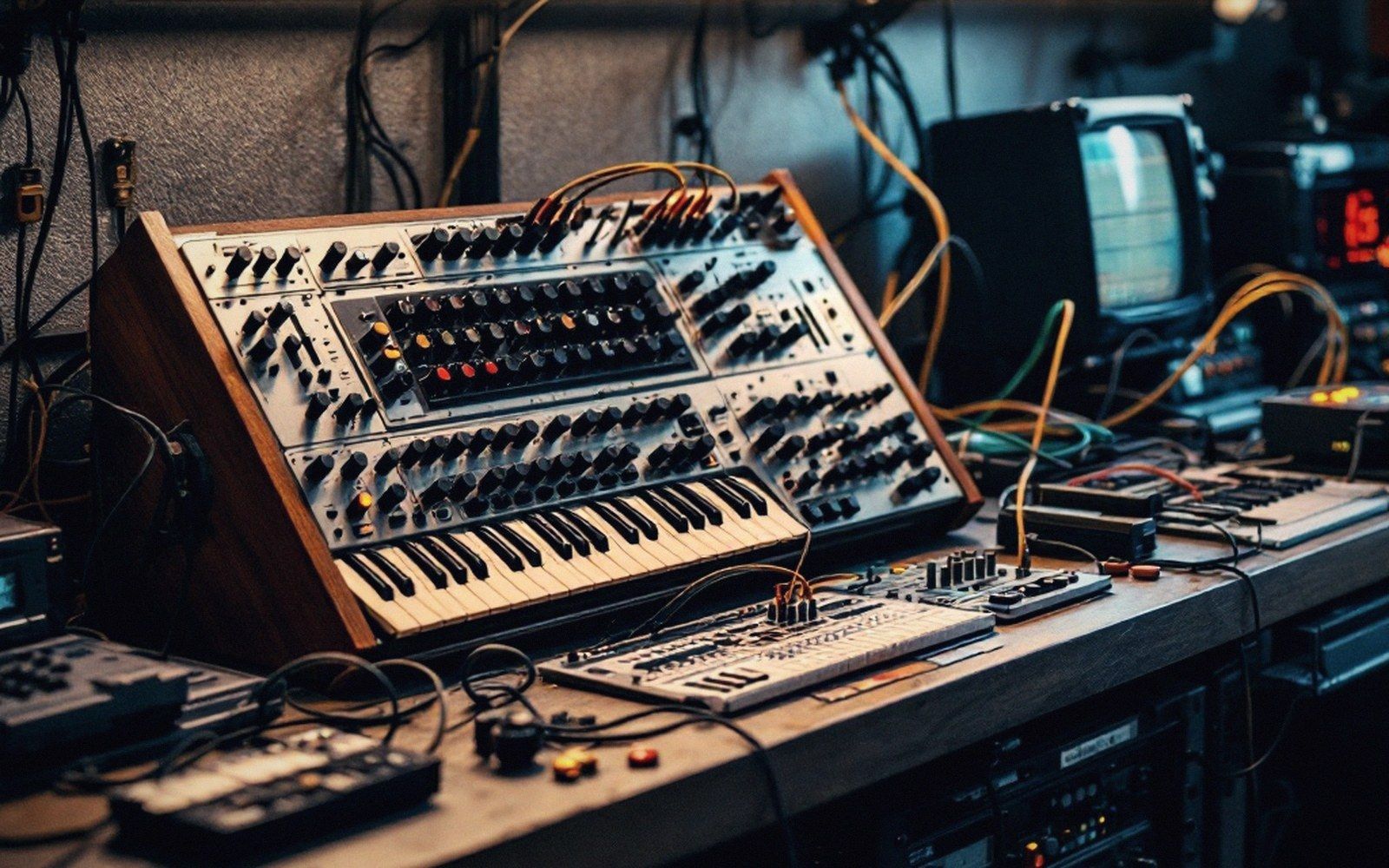
When individual channels arrive at the mix bus, something happens that has no direct equivalent in the digital domain: analogue summing. All the signals combine in a shared electrical environment — shared headroom, shared noise, shared odd behaviour when the combined amplitude pushes the bus amplifiers hard. This is not a mystical process, but it is a specific one, and it produces results that differ from adding the same signals arithmetically in a digital workstation.
The difference is partly harmonic. When multiple signals share a bus, and that bus runs close to its headroom ceiling, the amplifiers in the bus path generate low-order distortion that affects all the signals simultaneously and in proportion to their level. This is a form of passive glue: the loud things interact with each other rather than sitting in isolation. Engineers in the SSL era learned to push the mix bus and the bus compressor — the G-Bus compressor, the L-channel compressor — precisely because this interaction made the mix sound more coherent. The bus compressor is technically a dynamic processor, but what it actually does in most applications is tighten the shared headroom and make the summing interaction more consistent and more audible.
The 1980s SSL 4000 became the dominant console in major recording studios for a reason that had as much to do with this mix-bus behaviour and the integration of automation as with any individual channel characteristic. The VCA-based fader automation the 4000 series introduced allowed recall of an entire mix state — a transformative practical development — and the sound of that bus, coloured by the compressor that became near-standard in its G-series configuration, is the sound of a significant proportion of mainstream records made between roughly 1980 and the mid-1990s. If you hear that particular low-frequency density and that particular sense of cohesion in records from that period, you are partly hearing a piece of furniture.
- Neve 8000 series / 80-series modulesdiscrete transistor, transformer-coupled; characteristically warm, harmonically coloured
- Neve 1073 / 1081channel modules with distinct EQ curves; 1073 preamp topology widely associated with low-frequency weight
- API 1604early large-format API frame; Class A discrete amplifier topology
- SSL 4000 seriesVCA-based topology; introduced fully automated fader recall; G-series mix bus compressor became a de facto standard
- SSL G-series bus compressorhardware dynamic processor in the SSL 4000 G-series master section; integral to the mix-bus sound of 1980s–90s records
Limitation as character
Every parameter has a ceiling. In an analogue console, the ceiling is physical: the power supply rails, the headroom of the amplifier stages, the saturation point of the transformers. Going past those points does not produce a clean error or a digital clip — it produces a progressive distortion that, at moderate excess, sounds like compression and warmth, and at extreme excess sounds like the kind of harmonic smear that was frequently recorded deliberately. Engineers working at Neve-equipped facilities in the early 1970s pushed channels into transformer saturation routinely; the sound of a Neve desk driven hard is audible on countless rock and funk records without the sleeve noting it.
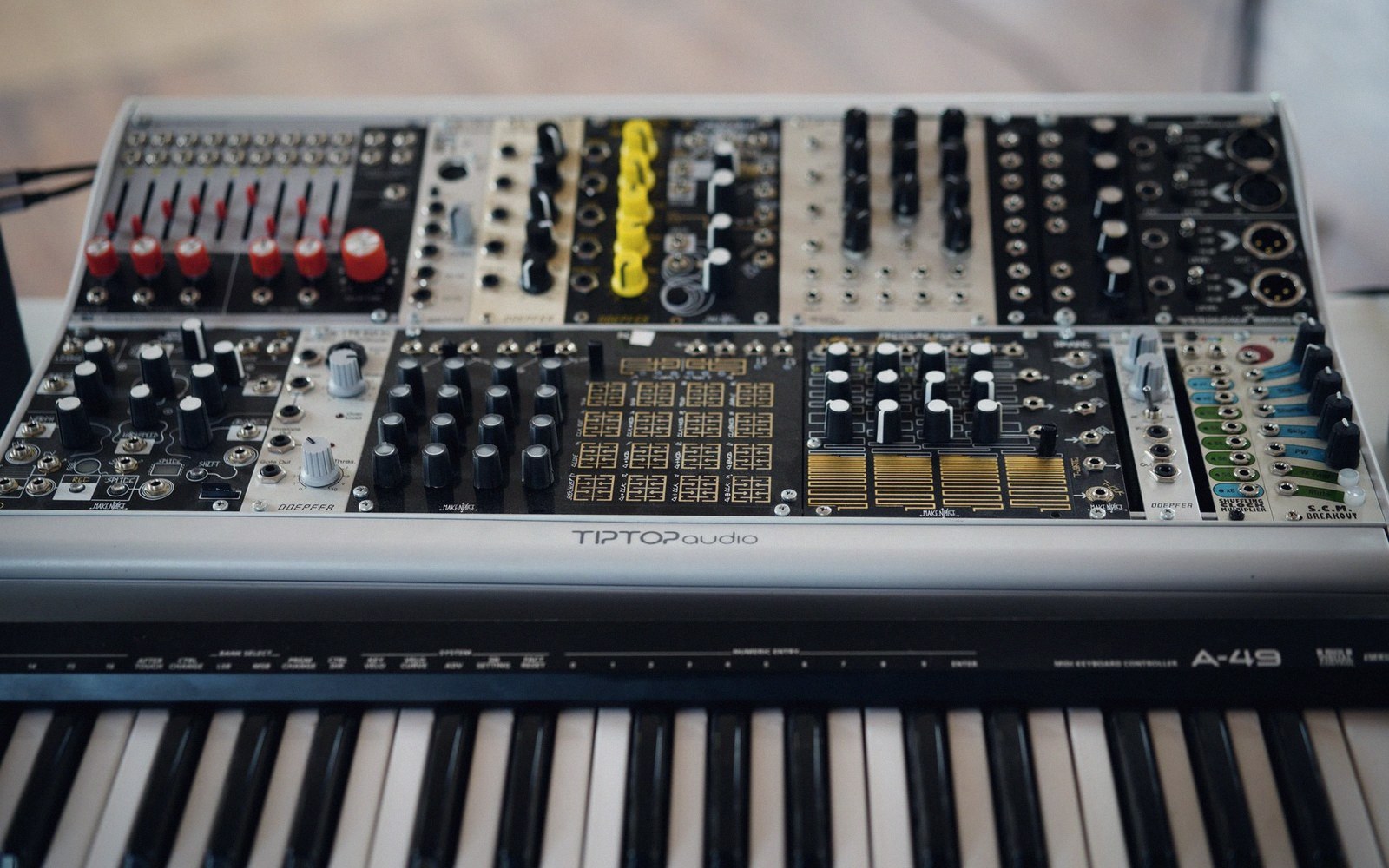
The desk as a constraint is also the desk as a vocabulary. A console's noise floor determines how far the engineer can push a quiet track before the floor rises audibly; this sets an effective dynamic range for the session. The console's maximum output determines how much headroom the tape machine has to work with; together they define the practical dynamic space of the entire recording chain. Working within those parameters is not a limitation imposed from outside — it is the material, in the same sense that the physical mass of a cymbal is the material the drum manufacturer works with.
Returning to that logic from a different direction: the reason engineers who moved to digital audio workstations in the late 1990s so frequently routed their mixes back through analogue consoles or summing amplifiers was not nostalgia. It was that the specific electrical behaviour of the desk — its summing, its bus amplifiers, its transformer loading — produced a result the arithmetic of digital addition did not replicate. The desk contributed something that was missed only when it was absent. The channel path was always a sound; it just required its removal to become visible.
The console receives no billing on the record. It never will. But the next time a bass sits a particular way in a mix, or a dense arrangement sounds less like separate elements stacked and more like a single thing with mass — that is the desk, doing what it always does, unmistakably.