 Photo: MAGstd / Pexels
The Clock, and Who Holds It
When Two Machines Disagree, Someone Has to Blink First
- The ceiling
- Two machines cannot both be right about time
- What imposed it
- Competing pulse standards, and drift
- What it produced
- A hierarchy of master and slave, audible the moment it fails
Sync is not glamorous. It has no filter character, no tuning quirk that producers later fetishised. It is the plumbing of multi-machine performance — and when it fails, it fails loudly, in front of people.
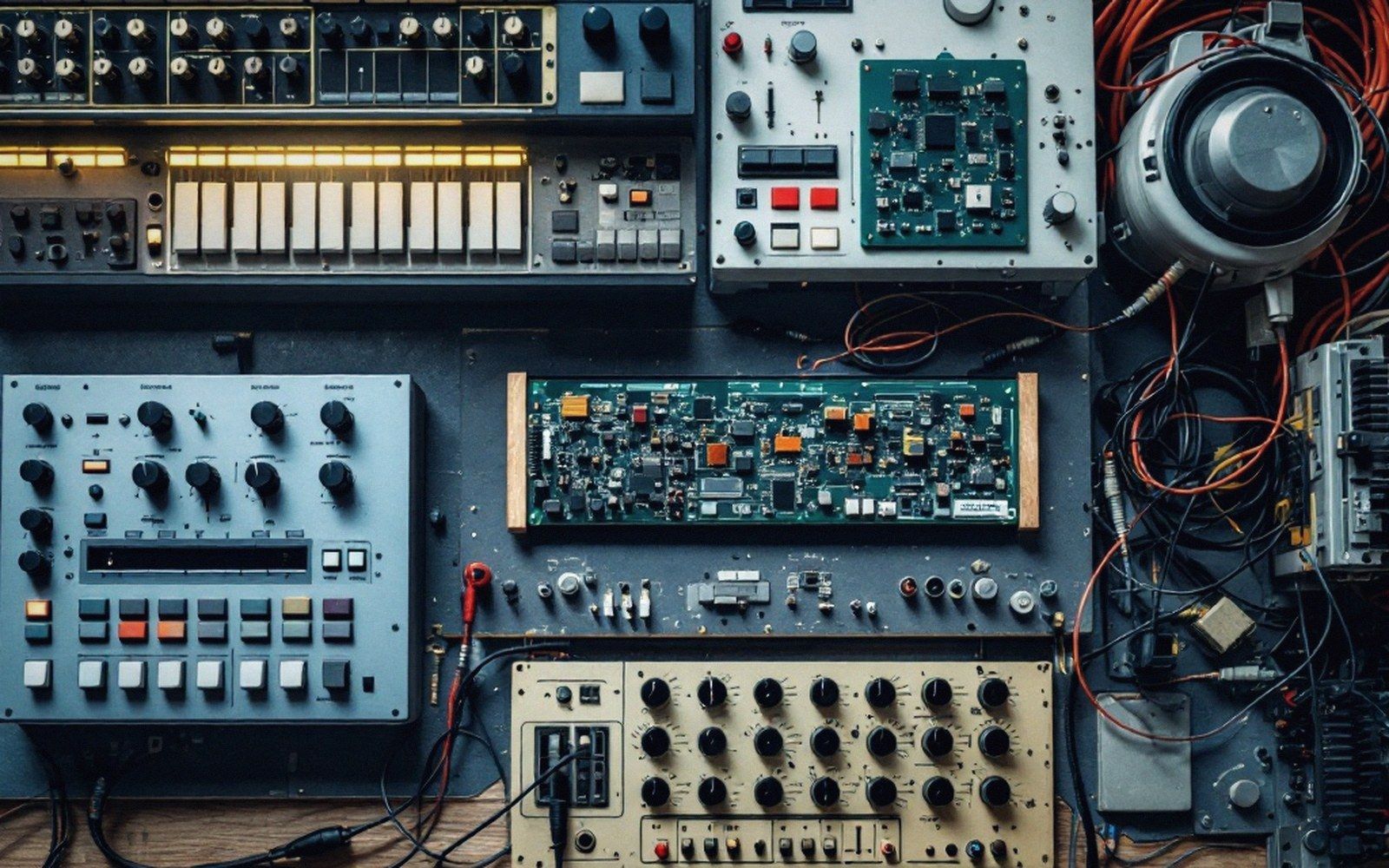
The problem is simple to state: two sequencers each have an internal clock, and internal clocks drift. Run a drum machine and a synthesiser sequencer side by side without any link between them and within thirty seconds the relationship between their patterns has shifted. Within two minutes it has collapsed. The solution — making one machine listen to another — introduces its own politics. Every sync system is a negotiation about who leads and who follows.
- Sync 24 / DIN SyncRoland's pulse format; 24 pulses per quarter note over a 5-pin DIN cable; not compatible with Korg's 2-pulses-per-step standard
- MIDI Clock24 PPQN embedded in the MIDI serial stream; vulnerable to jitter when the data stream is busy; widely adopted because of ubiquity, not precision
- Tape syncpulse recorded to a tape track; locks the clock to the recording medium; introduces wow-and-flutter jitter at consumer tape speeds
- SMPTE / MTCSociety of Motion Picture and Television Engineers timecode, adapted as MIDI Time Code; finer resolution; used where video sync or high precision is required
The earliest practical answer was a pulse. Roland's DIN Sync, sometimes called Sync 24, sent 24 pulses per quarter note down a five-pin DIN cable; a slave machine counted those pulses and stepped its sequencer accordingly. The TR-808 and its contemporaries ran on exactly this. Korg used a different rate — two pulses per step rather than 24 per quarter note — so a Roland master and a Korg slave could not directly understand each other. These were not bugs; they were choices made before anyone imagined the machines would need to talk. The result was a small industry of converters and workarounds.
Tape sync offered a different approach: record the pulse to tape, play it back, and let the tape become the master. This married the clock to the recording and meant everything stayed locked to the same physical moment. In practice, cheap tape wobbled — wow and flutter introduced jitter that made the slave sequencer stumble slightly. Whether you called that a problem or a texture depended on what decade you were mixing in.
MIDI Clock Is a Compromise With Numbers
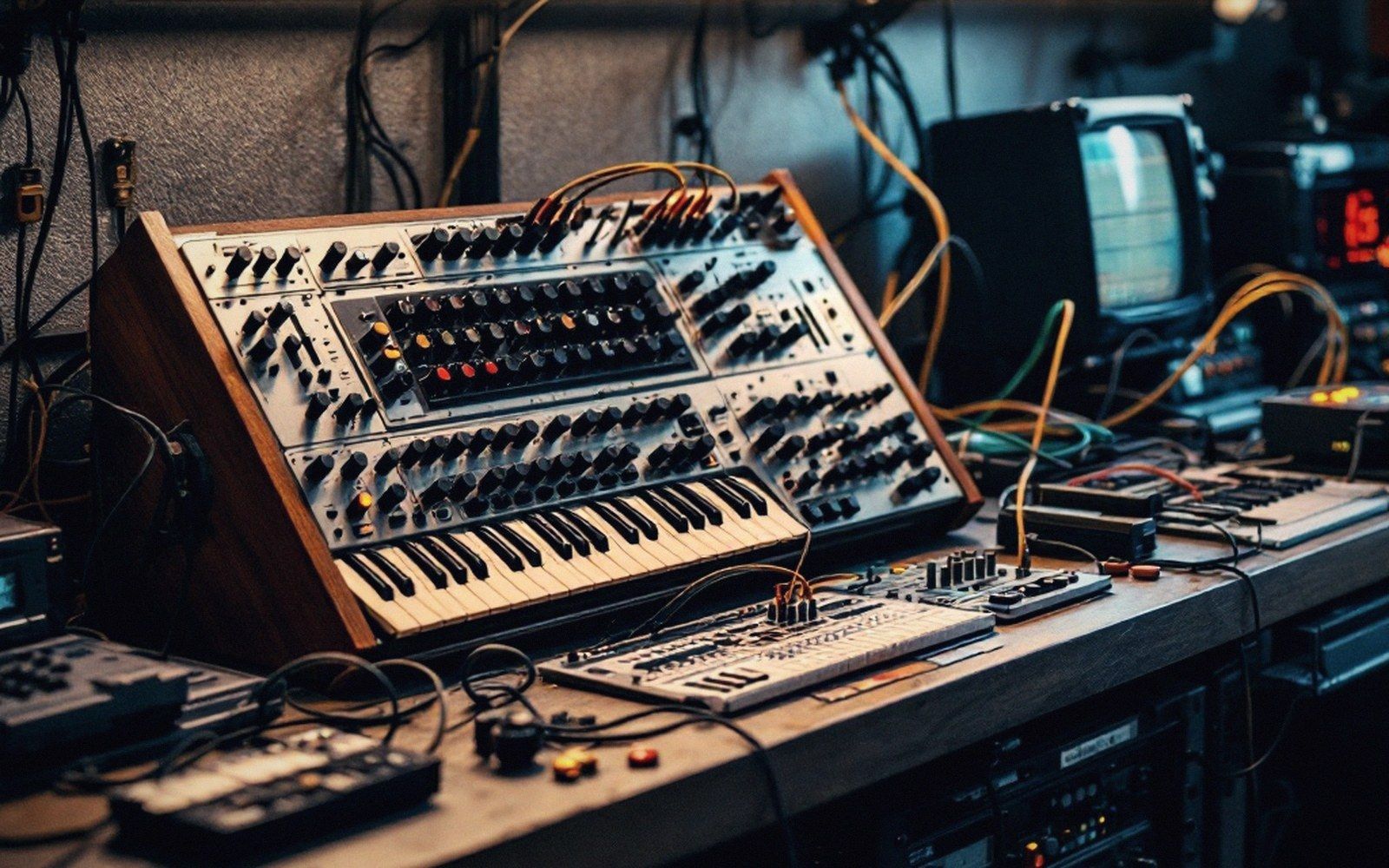
When MIDI arrived in 1983, it embedded a clock protocol into the same serial stream carrying note data. The master broadcasts a continuous stream of timing ticks; every slave counts them. Start, Stop and Continue messages tell slaves when to run.
The problem is latency. MIDI is a serial protocol, meaning messages queue. A busy MIDI chain — many note messages firing simultaneously — delays the timing ticks behind them. That delay is small, typically a few milliseconds, but on a tight kick pattern it is audible as smear. The more devices in the chain, the worse it gets. Studios that cared about this ran separate MIDI lines for clock and for note data, or used dedicated sync cables.
Resolution is the other limit. At 24 PPQN — pulses per quarter note — MIDI clock cannot express very small timing variations. Later protocols, including MIDI Time Code and the MTC-derived systems built around SMPTE, addressed this for post-production work, offering finer resolution for synchronising sequencers to video. But MIDI clock persisted in live performance because it was already there, already understood, already built into every box.
- Pre-1983machines sync via proprietary pulse standards; Roland and Korg use incompatible formats; converters become necessary accessories
- 1983 — MIDI specification published; MIDI Clock introduced as part of the standard
- Mid-1980s onwardstudios begin routing clock and note data on separate MIDI lines to reduce jitter; tape sync remains standard in recording contexts
- SMPTE / MTC adoptionpost-production and video-linked work standardises on timecode; live performance largely stays on MIDI Clock
What no sync standard resolves is the deeper question of feel. A clock is a grid, and a grid is an argument about where notes belong. When the sequencer is the master, it defines what a beat is — not a human body settling into a groove, but a crystal oscillator's opinion about time. The machines agree with each other precisely because they all agree with something inhuman. The rhythms that came out of those locked systems — tight, mechanical, unwavering — were partly the sound of that agreement. Whether it was a flaw or the whole point has been argued continuously since the first two drum machines ran out of phase with each other and someone, somewhere, turned the clock send on.